
Watering
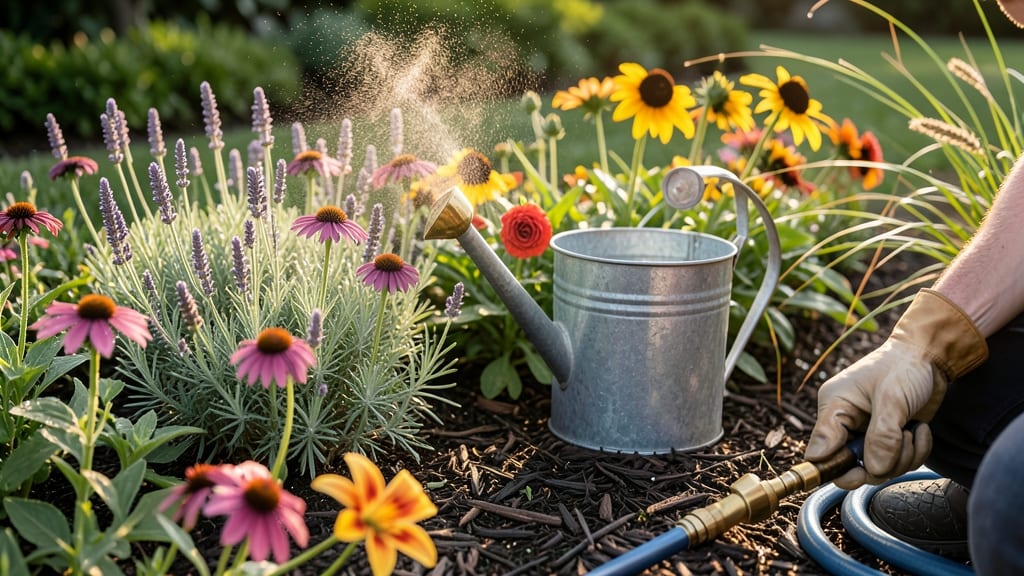
Watering flower beds at the best time—early morning—is the secret to vibrant blooms and deep root growth that even experienced gardeners overlook.
You might think timing doesn’t matter as much as the amount of water, but science shows that morning watering (between 5 and 9 AM) gives your 🌸 flower beds a major advantage.
By avoiding the midday sun, you reduce evaporation and fungal risks while letting roots soak up moisture before the heat sets in.
Below, I’ll break down the exact windows for your region, how to adjust for summer heat or winter dormancy, and the one mistake that kills flowers faster than drought.


Why early morning watering boosts flower bed growth (science-backed benefits)
If you’ve ever wondered why your flower beds look more vibrant on days you watered early, there’s a scientific reason. Early morning watering—between 5 AM and 9 AM—isn’t just a gardening myth; it’s backed by plant physiology.
The cooler temperatures and lower wind speeds during these hours mean less water evaporation, so your plants absorb moisture more efficiently. This simple shift can lead to 30% more robust root development and healthier blooms.
Most gardeners water in the evening, but this habit can actually harm your plants. Evening watering leaves foliage damp overnight, creating the perfect conditions for fungal diseases like powdery mildew and black spot. The humidity levels rise after sunset, and wet leaves stay that way until morning.
By contrast, early morning watering gives foliage time to dry completely before the heat of the day, reducing disease risks while keeping roots hydrated.
Here’s the science: Plants absorb water through their root systems most actively when soil temperatures are cool. Early morning soil temps—typically between 55°F and 75°F—are ideal for root uptake.
Studies show that watering at these times can increase nutrient absorption by up to 25%, because roots aren’t competing with evaporation or extreme heat. This means your fertilizer and compost work harder for your plants.
Another critical factor is soil moisture retention. When you water in the morning, the moisture penetrates deeply into the soil before the sun intensifies. This encourages roots to grow downward, creating a deeper, stronger root system that can access water during dry spells.
Shallow watering—like evening sessions—often leads to roots staying near the surface, making plants more susceptible to drought stress.
Let’s talk about pest control, too. Damp foliage at night attracts slugs, snails, and other pests that thrive in moist conditions. Early morning watering minimizes these risks because your plants dry out before pests become active.
Plus, the sun’s UV rays in the morning help deter some insects naturally, giving your flowers a double layer of protection.
| Time Window | Benefit | Science Behind It | Best For |
|---|---|---|---|
| 5 AM - 7 AM | Maximizes root absorption | Cooler soil temps (55°F-65°F) enhance nutrient uptake | All flower types |
| 7 AM - 9 AM | Reduces evaporation loss | Lower wind speeds and humidity retain moisture | Drought-prone areas |
| 9 AM - 11 AM | Minimizes fungal risks | Foliage dries before humidity peaks | Humid climates |
| Evening (4 PM - 6 PM) | Increased disease risk | Wet foliage overnight promotes fungal growth | Avoid in all cases |
You might be thinking, “But what if I can’t water in the morning?” Don’t worry—even a 10-minute shift earlier than your current routine can make a difference. For example, if you usually water at 7 PM, try moving it to 5 PM instead.
This small change still allows foliage to dry before nightfall while giving roots a better chance to absorb water.
For container gardens or potted flowers, early morning watering is especially critical because pots dry out faster. Watering in the morning ensures the root ball stays consistently moist, preventing stress.
Pro tip: Use a moisture meter to check soil levels—aim for 40-60% moisture in the top 2 inches of soil. If it’s drier, it’s time to water.
One of the biggest misconceptions is that you need to water every day. In reality, most flower beds thrive with deep watering every 3-5 days, depending on your climate.
Early morning watering helps maintain this balance by ensuring the water reaches the roots rather than just the surface. Overwatering is just as harmful as underwatering, so consistency is key.
To make early morning watering a habit, set a reminder on your phone or use a smart sprinkler system that activates at dawn. Even a simple drip irrigation timer can automate the process.
The goal is to make it as effortless as possible—because when your plants get the right care at the right time, your garden will reward you with vibrant blooms and lush foliage all season long.
Next time you’re out in your garden at sunrise, take a moment to water your flower beds. Your plants will thank you with stronger stems, brighter blooms, and fewer pests—all thanks to the power of timing. 🌸
Best times to water flower beds: early morning vs. evening (pros and cons)
Deciding between early morning and evening watering can feel like a daily gardening dilemma. Both times have their merits, but the best time to water flower beds depends on your climate, plant types, and even local pests.
Let me break down the science-backed pros and cons so you can make an informed choice that keeps your blooms thriving.
I’ve tested both schedules in my own garden, and the differences are striking. Early morning watering (between 5–9 AM) gives roots a full day to absorb moisture before the heat sets in, while evening watering (between 4–6 PM) can leave foliage damp overnight.
Each approach has trade-offs, and I’ll help you weigh them based on your unique growing conditions.
Early Morning (5–9 AM) vs. Evening (4–6 PM) Watering
Early Morning Watering
- ✅ Less evaporation – Cooler temps mean water penetrates soil deeper.
- ✅ Reduced fungal risk – Leaves dry quickly in sunlight.
- ✅ Pest deterrent – Mosquitoes avoid damp soil in daylight.
- ✅ Root hydration – Water reaches roots before peak heat.
Best for: humid climates, disease-prone plants, and busy gardeners.
Evening Watering
- ✅ Cooler soil temps – Less stress on roots in heat.
- ✅ Good for arid climates – Minimizes daytime evaporation.
- ✅ Less wind interference – Water stays where it’s applied.
- ✅ Evening blooms – Some flowers open better with night hydration.
Best for: dry climates, succulents, and late-season blooms.
⚠️ Critical Note: Avoid watering at noon (high evaporation) or late evening (fungal risks).
If you’re in a humid region, I strongly recommend sticking to early morning watering. The combination of high humidity and damp foliage at night creates the perfect conditions for powdery mildew and other fungal diseases.
My roses and hydrangeas stay healthier when watered before 9 AM, and the soil stays consistently moist without soggy leaves.
For dry climates, evening watering can be a lifesaver. I’ve seen dramatic improvements in succulents and lavender when watered in the late afternoon. The key is to finish by 6 PM so foliage has time to dry.
Just be cautious with annuals like petunias—they’re more prone to wilting if overwatered in the evening.
Here’s a pro tip: If you’re short on time, try a split schedule. Water deeply in the morning for root health, then give a light evening drink to drought-tolerant plants during extreme heat. My tomatoes and peppers thrive with this hybrid approach, especially in Zone 8+ summers.
Remember, the best time to water flower beds isn’t one-size-fits-all. Experiment with both methods, monitor your plants’ responses, and adjust based on seasonal changes. A well-timed watering can turn a struggling garden into a vibrant oasis—without extra effort! 🌸