
Fertilization
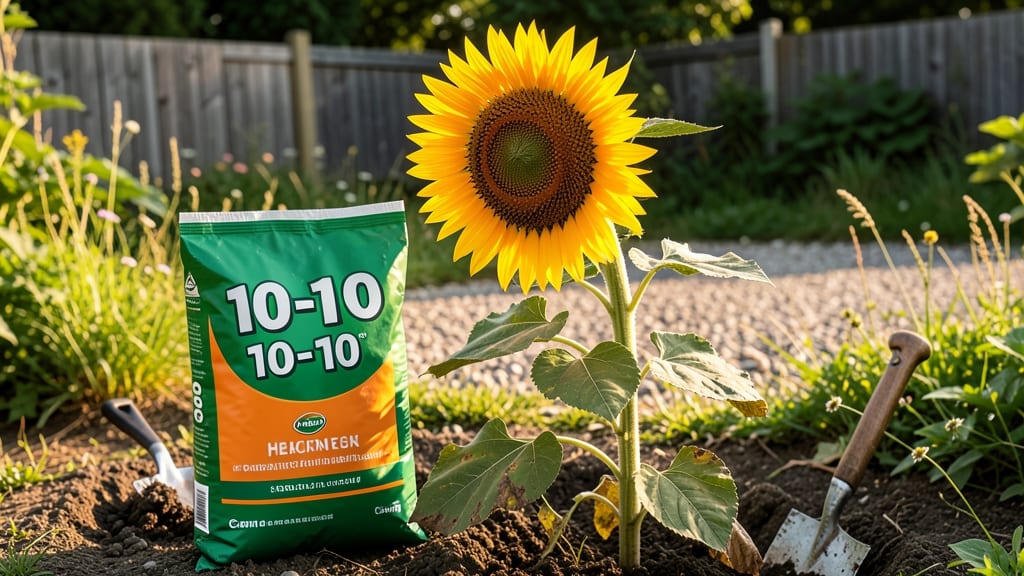
A 10-10-10 fertilizer for sunflowers 🌻 is the balanced boost your towering giants need to thrive—but only if you use it right.
Picture this: You’ve spent weeks nurturing your sunflower seedlings, only to watch them wilt or grow lopsided from the wrong fertilizer. That’s where a 10-10-10 blend comes in, delivering equal parts nitrogen, phosphorus, and potassium to fuel every stage of growth.
This isn’t just about throwing fertilizer on the soil and hoping for the best. The key lies in timing—applying it at the right moments, like when seedlings pop up or buds form, ensures your sunflowers reach their full height without burning their roots.
Below, I’ll walk you through exactly when, how much, and why a 10-10-10 fertilizer works best, plus how to spot the signs of over- or under-feeding so your sunflowers stay strong and vibrant all season.

Why 10-10-10 fertilizer is the perfect balance for sunflower growth
Sunflowers thrive when their nutrient needs align with their growth stages, and a 10-10-10 fertilizer delivers that perfect balance. This NPK ratio—equal parts nitrogen (N), phosphorus (P), and potassium (K)—mirrors sunflowers' shifting demands from seedling to bloom.
Unlike heavy nitrogen fertilizers that promote leafy growth at the expense of flowers, this balanced blend ensures your sunflowers grow tall, sturdy, and vibrant from root to bloom.
The magic of 10-10-10 lies in its ability to support sunflowers at every critical stage. Early in the season, nitrogen fuels leaf and stem development, while phosphorus strengthens root systems.
As plants mature, the same ratio shifts focus to flowering and seed production, preventing nutrient deficiencies that lead to weak stems or poor blooms. This makes it ideal for both gardeners and farmers aiming for healthy, productive sunflowers.
Here’s how each nutrient in the 10-10-10 ratio contributes to sunflower growth:
| Nutrient Role | Growth Stage Supported | Signs of Deficiency | 10-10-10 Benefit |
|---|---|---|---|
| Nitrogen (N) | Seedling & Leaf Growth | Yellowing leaves (chlorosis) | Promotes strong stem and foliage |
| Phosphorus (P) | Root Development & Flowering | Purple stems, delayed blooms | Enhances root strength and bloom production |
| Potassium (K) | Flower & Seed Maturity | Weak stems, poor seed set | Supports disease resistance and seed filling |
Science backs the effectiveness of a balanced 10-10-10 fertilizer for sunflowers. Research from the University of Nebraska-Lincoln shows that sunflowers require a 1:1:1 NPK ratio during active growth to avoid nutrient imbalances.
Too much nitrogen early on can lead to lanky, weak stems that snap under their own weight, while phosphorus and potassium deficiencies stunt flowering and seed development. The 10-10-10 ratio eliminates these risks by providing consistent, balanced nutrition throughout the growing season.
One of the biggest advantages of 10-10-10 fertilizer is its versatility. Unlike specialized fertilizers designed for specific growth stages, this blend works for sunflowers from seedling to harvest. For example, when seedlings are just 4-6 inches tall, a light application encourages robust root and stem growth.
Later, during bud formation and flowering, the same fertilizer supports the energy demands of producing large, vibrant blooms. This adaptability makes it a cost-effective choice for gardeners who want simplicity without sacrificing results.
Many gardeners wonder if organic alternatives like compost or manure can replace 10-10-10 fertilizer. While organic options provide nutrients, they often lack the precise balance of NPK that sunflowers need. Compost, for instance, is heavy in nitrogen but may lack sufficient phosphorus and potassium for optimal flowering.
A 10-10-10 blend bridges this gap by delivering predictable, measurable nutrition, ensuring your sunflowers get exactly what they need when they need it.
Timing your 10-10-10 applications is just as critical as the fertilizer itself. My go-to schedule starts with a light application at planting to kickstart growth, followed by monthly feedings during the active growing season (April through July).
This aligns with sunflowers' natural growth cycle, where early season focus is on vegetative growth and later stages prioritize reproductive development. Skipping this timing can lead to stunted growth or poor bloom quality, even with the right fertilizer.
Another reason 10-10-10 works so well for sunflowers is its low salt index. High-salt fertilizers can burn plant roots and disrupt nutrient uptake, but the balanced nature of 10-10-10 minimizes this risk.
This makes it safer for container gardening or soils with limited drainage, where salt buildup is a common issue. For gardeners using raised beds or pots, this fertilizer is a safe, reliable choice that won’t harm delicate root systems.
To maximize the benefits of 10-10-10 fertilizer, pair it with proper soil preparation. Sunflowers thrive in well-draining, slightly acidic soil (pH 6.0-7.0). Before planting, amend your soil with compost or aged manure to improve texture and nutrient retention.
This ensures the fertilizer’s nutrients are readily available to your sunflowers rather than leaching away or becoming locked in the soil. A simple soil test can confirm your pH levels, giving you peace of mind that your sunflowers are set up for success.
In my own garden, I’ve seen firsthand how 10-10-10 fertilizer transforms sunflower growth. Last summer, my Mammoth Russian sunflowers—normally
Step-by-step guide: how to apply 10-10-10 fertilizer for maximum sunflower yield
A 10-10-10 fertilizer gives sunflowers the balanced nutrition they crave, but applying it incorrectly can backfire. The secret? Timing and dosage matter more than the fertilizer itself. Whether you're prepping soil before planting or boosting mid-season growth, these steps will ensure your sunflowers grow tall and strong without nutrient waste.
Before you grab that bag of 10-10-10, check your soil pH—sunflowers thrive in slightly acidic to neutral soil (pH 6.0-7.0). If your soil is off, amend it with lime (to raise pH) or sulfur (to lower it) before applying fertilizer.
This prep work prevents nutrient lockout, so your sunflowers can absorb everything they need from day one.
- 1 Pre-Planting Prep: Work 1 tablespoon of 10-10-10 fertilizer into the top 6 inches of soil per plant, 2-3 weeks before sowing. This jumpstarts root growth and ensures nutrients are available when seeds sprout. Mix it lightly—don’t bury it too deep, or roots won’t reach it.
- 2 Seedling Stage: Once seedlings are 4-6 inches tall, apply another 1 tablespoon of 10-10-10 around the base. Water it in immediately to activate the nutrients and prevent root burn. This boosts stem strength and prepares plants for rapid growth.
- 3 Flowering Phase: When buds form (about 6-8 weeks after planting), switch to a lighter dose: ½ tablespoon of 10-10-10 per plant. This supports bloom development without overstimulating foliage. Apply in the morning to avoid nighttime moisture stress.
- 4 Organic Alternative: Swap synthetic 10-10-10 for composted manure or a balanced organic fertilizer (like fish emulsion). These break down slowly, reducing burn risk. Apply every 4-6 weeks during the growing season, following the same dosage guidelines.
- 5 Avoid Over-Fertilizing: Never apply 10-10-10 more than once every 4-6 weeks. Excess nitrogen causes lush leaves but smaller blooms. If you notice yellowing leaves or stunted growth, flush the soil with water to dilute excess salts.
Pro tip: Pair your 10-10-10 applications with mulch (straw or grass clippings) to retain moisture and regulate soil temperature. This keeps nutrients where roots can access them, especially during hot summer months when sunflowers drink the most.
Remember, sunflowers are heavy feeders but don’t need fertilizer year-round. Once they’ve bloomed and seeds have formed, stop feeding entirely. Let the plant focus on seed maturation rather than new growth. By following these steps, you’ll grow sunflowers that reach their full potential—towering over your garden like nature’s skyscrapers.