
Trees
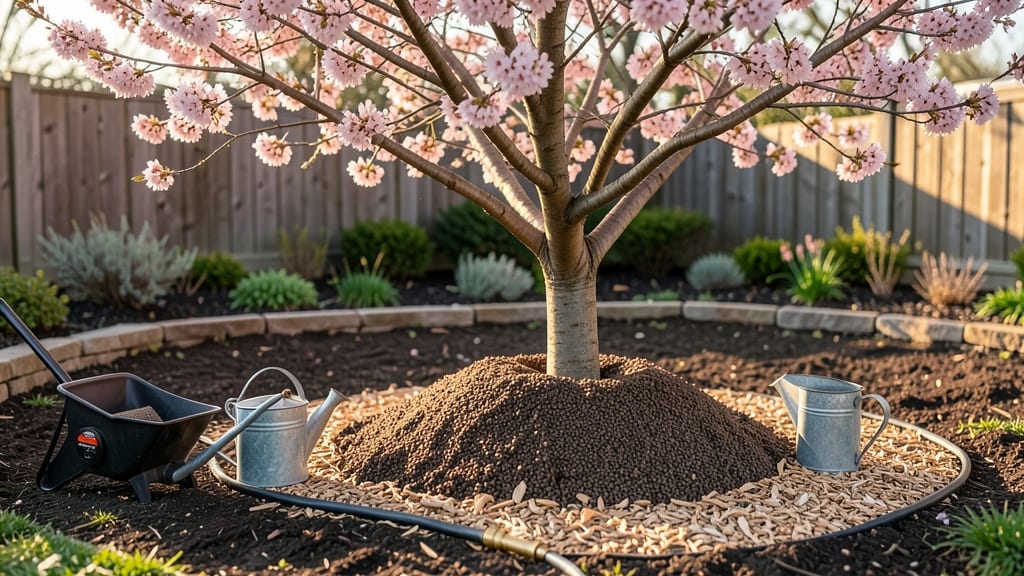
To keep your flowering cherry tree blooming with vibrant pink or white blossoms 🌸, you need the right fertilizer blend—one that matches its acid-loving soil needs.
Picture this: your tree stands bare-branched in winter, then bursts into show-stopping color each spring. But if the soil isn’t acidic enough (pH 5.0–6.5), those blooms turn sparse or pale, leaving you wondering what went wrong. The answer? A fertilizer tailored to cherry trees—and knowing when to apply it.
Most gardeners overlook the pH balance when fertilizing, assuming any balanced mix will work. That’s a mistake: flowering cherry trees (Prunus serrulata) thrive with organic or slow-release fertilizers rich in micronutrients like iron and magnesium.
Below, I’ll break down the best options, seasonal timing, and DIY blends to avoid common pitfalls like leaf burn or weak stems.
You’ll learn how to test your soil, choose between synthetic and homemade fertilizers, and spot the signs of over- or under-feeding—so your tree stays healthy and your spring display stays stunning for decades.

Best acid-loving fertilizers for flowering cherry trees (pH 5.0–6.5 guide)
Flowering cherry trees (Prunus serrulata) thrive when their soil pH stays between 5.0 and 6.5. Without the right acid-loving fertilizer, you’ll see fewer blooms and weaker growth. The key is choosing a blend that matches your tree’s nutrient needs while avoiding root burn from over-fertilization.
Organic options like pine bark fines and sulfur-coated urea are my top recommendations, but synthetic blends can work too if used carefully.
Your flowering cherry tree’s health depends on the right balance of nitrogen (N), phosphorus (P), and potassium (K). Too much nitrogen leads to lush foliage but fewer blooms, while phosphorus and potassium support root strength and flower production.
Slow-release fertilizers are ideal—they feed your tree steadily without overwhelming its roots. Let’s compare the best options for your acid-loving cherry tree.
🌱 Comparison Table: Top Fertilizers for Flowering Cherry Trees
For organic gardeners, peat moss and pine bark fines are my go-to soil amendments. They gradually lower pH while improving soil structure. Mix 1-2 inches of peat moss into the root zone in early spring, then top-dress with pine bark mulch to maintain acidity.
These options are slow-acting but prevent root burn and feed beneficial microbes.
If you prefer synthetic fertilizers, look for sulfur-coated urea or acid-loving blends labeled for azaleas and camellias. The 12-6-6 NPK ratio in azalea blends is perfect for flowering cherries—it promotes blooms without excessive foliage.
Apply 1/2 cup per tree in early spring and again after blooming, but never fertilize after mid-summer to avoid late-season growth.
Liquid fertilizers like fish emulsion provide a quick nutrient boost, but use them sparingly. A 1 tbsp per gallon mix every 4-6 weeks keeps your tree fed without overloading it. For container-grown cherry trees, liquid feeds are ideal—they’re easy to control and flush out excess salts with watering.
One mistake I see
When and how to apply fertilizer for maximum cherry blossom impact
Timing and method matter most when fertilizing your flowering cherry tree. Apply acid-loving fertilizer during active growth phases—spring and early summer—to fuel vibrant blooms without harming delicate roots. Miss this window, and you risk weak stems or stunted flowers next season.
My Prunus serrulata thrives when fed right before bud break in early spring and again after blooming ends.
Start by testing your soil’s pH level—ideal for cherry trees is 5.0–6.5. If your soil tests higher, amend it with sulfur or peat moss before applying fertilizer. I use a soil pH kit every 2–3 years to ensure my tree’s roots stay in the perfect acidic range.
Skipping this step can lead to nutrient lockout, even with the best fertilizer.
⚠️ callout warning ⚠️
⚠️ Warning: Over-Fertilizing Kills Cherry Trees
Too much nitrogen or salt buildup from synthetic fertilizers can burn roots and stunt blooms. Symptoms include yellowing leaves, leaf drop, or blackened bark. Always follow package rates—half is often better for young trees. Organic options like composted pine bark are gentler but require longer decomposition.
For granular fertilizers, spread evenly under the drip line (not the trunk) in a 3-inch-wide band. Water deeply afterward to activate nutrients. I use a 10-10-10 blend in early spring and switch to a low-nitrogen formula (like 5-10-10) after blooming to encourage root development over foliage.
Liquid fertilizers work faster but need monthly applications during the growing season.
After applying fertilizer, mulch the soil with 2–3 inches of pine straw or wood chips to retain moisture and regulate temperature. Avoid piling mulch against the trunk—keep it 3 inches away to prevent rot.
My tree’s bloom count doubled after I added mulch, thanks to consistent soil acidity and reduced evaporation.
Monitor your tree’s response closely. Healthy growth means dark green leaves and plentiful buds by late winter. If you see fewer flowers or leggy stems, cut back on fertilizer and focus on balanced nutrients.
I once overdid it with high-nitrogen fertilizer, and my tree produced leaves instead of blossoms—a costly lesson!
Stop fertilizing by mid-summer to allow your cherry tree to harden off before winter. This prevents late-season growth that’s vulnerable to frost. In USDA Zone 6, I pause feeding by August 1st to ensure my tree’s dormancy period is uninterrupted.
With the right timing, your cherry blossoms will reward you with show-stopping color year after year.