
Vegetables
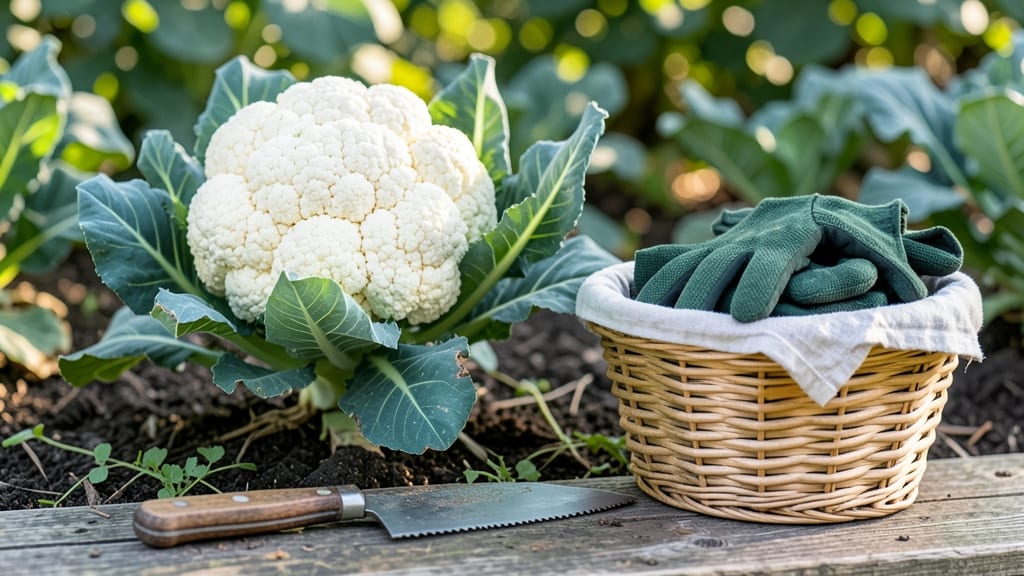
Knowing the perfect harvest time for cauliflower🥬 means the difference between a crisp, snowy head and a sad, yellowing mess.
Picture this: you’ve nurtured your plants for months, and now the moment is here. But wait—is that head truly ready? Too early, and you’ll miss out on full flavor and size. Too late, and you’ll end up with a woody, bitter curd.
The key is catching it at just the right moment, when the head is firm, tightly wrapped, and still vibrant in color.
Most cauliflower varieties take 70-100 days to reach harvest time, but timing isn’t just about days—it’s about the plant’s signals. Weather, soil conditions, and even the time of day can shift when you should grab your shears.
Below, I’ll walk you through the exact visual cues to look for, plus pro tips to ensure your harvest stays fresh and delicious for weeks.
Ready to avoid the common mistakes that lead to wasted effort? Let’s dive into how to pick your cauliflower at its peak—so you can enjoy that farm-fresh satisfaction without the guesswork.

How to identify the perfect cauliflower harvest time by visual clues
Timing your cauliflower harvest correctly ensures you get those prized snow-white curds that taste fresh and crisp. The key lies in observing four critical visual clues that signal peak ripeness.
Miss these signs, and you risk harvesting heads that are either too small or woody. Let’s break down what to look for to nail the perfect harvest window every time.
First, focus on the head size. A ready-to-harvest cauliflower typically measures between 6 to 8 inches in diameter. This size ensures the curds are fully developed but haven’t started to loosen or split.
Smaller heads may still need time, while oversized ones often become tough and less flavorful. Use a tape measure if you’re unsure—precision matters!
Next, examine the outer leaves. They should remain tightly wrapped around the head, acting like a protective blanket. If the leaves start to yellow or brown, it’s a red flag—the head is either overripe or struggling.
Healthy leaves stay vibrant green, indicating the plant is still thriving and the curds are at their peak.
Color consistency is another non-negotiable clue. Whether you’re growing white, purple, or green cauliflower, the head should display a uniform hue without blemishes. Dull or patchy colors suggest stress, like uneven watering or pest damage.
For white varieties, aim for a bright, creamy appearance—any yellowing means it’s past its prime.
| Visual Clue | Ready for Harvest? | Action |
|---|---|---|
| Head Size (6-8 inches) | ✅ Yes | Harvest within 1-2 days |
| Outer Leaves (Tight & Green) | ✅ Yes | Protect from pests |
| Color (Uniform & Vibrant) | ✅ Yes | Harvest immediately |
| Stem (Thick & Sturdy) | ✅ Yes | Cut cleanly with pruners |
| Head Size (<6 inches) | ❌ No | Wait 3-5 days |
| Outer Leaves (Yellow/Brown) | ❌ No | Remove damaged leaves |
Don’t overlook the stem test, a quick way to confirm readiness. Gently bend the stem near the base—if it snaps easily, the head is ripe. A stubborn stem means it needs more time.
This test is especially useful for purple or green varieties, which can be trickier to judge by color alone. Pair it with the other clues for foolproof results.
One of the biggest mistakes gardeners make is harvesting based on days after planting alone. While cauliflower typically matures in 70-100 days, environmental factors like temperature swings or nutrient deficiencies can delay ripening. Always prioritize visual cues over calendar dates—your plants will thank you with better flavor and texture.
If your cauliflower heads start to split or open prematurely, it’s often a sign of uneven watering or sudden heat. To prevent this, keep soil moisture consistent and mulch around the base to retain humidity.
Split heads can still be harvested, but focus on the inner curds for the best eating quality. Save the outer leaves for compost or stir-fry.
Harvesting at the right time also extends your plant’s productivity. Some varieties, like Romanesco, produce multiple side shoots after the main head is cut. By harvesting the primary head when it’s perfect, you encourage these secondary curds to form, giving you a second harvest.
This trick works best with cool-season varieties planted in early spring or late summer.
Finally, time your harvest for the coolest part of the day, ideally in the morning. This reduces stress on the plant and helps preserve the curds’ crispness. Use a sharp knife or pruners to cut the stem about 1 inch below the head.
Avoid tugging—this can damage the plant and leave the head vulnerable to pests.
With these visual clues and tips, you’ll never miss the perfect moment to harvest your cauliflower again. The reward? A bounty of tender, flavorful curds that make every gardening effort worth it. Happy harvesting! 🥬
Best practices for harvesting cauliflower to maximize yield and quality
Once you’ve spotted that perfect cauliflower head ready for harvest, the way you cut and handle it makes all the difference. A sharp cut preserves the plant’s energy for any side shoots, while gentle handling keeps those snowy curds crisp and flavorful.
I’ve learned the hard way—rough handling or waiting too long can turn your prize head into a mushy disappointment.
Timing your harvest isn’t just about the day; it’s about the time of day too. Early morning is ideal because the plant’s moisture levels are highest, making the curds firmer and less prone to bruising.
Plus, cooler temperatures help prevent wilting during transport or storage. Trust me, this small detail can extend your cauliflower’s shelf life by days.
Here’s my pro tip: always use a clean, sharp knife or pruners to cut the stem about 1-2 inches below the head. This leaves the plant intact for potential side shoots, especially in varieties like Romanesco or Purple of Sicily.
Avoid tearing the leaves—they protect the head from sun exposure, which can turn it yellow or bitter.
🌱 Harvest Time for Cauliflower: The Golden Window
Best time to harvest: Early morning (before 8 AM) on a cool, cloudy day to preserve moisture and firmness.
Tools needed: Sharp knife or pruners, clean gloves (to avoid bacterial transfer), and a basket (not plastic bags—they trap moisture).
Cutting technique: Slice the stem 1-2 inches below the head at a 45-degree angle to prevent water pooling.
Post-harvest care: Trim outer leaves but leave 1 inch of stem attached to slow wilting.
After harvesting, don’t wash your cauliflower right away—dirt protects the head from drying out. Instead, store it in the crisper drawer of your fridge, wrapped in a damp paper towel inside a plastic bag.
This mimics humidity levels and keeps it fresh for up to 5-7 days. For longer storage, consider blanching and freezing—it’s a game-changer for preserving that farm-fresh taste.
If your cauliflower plant is a prolific producer like Snowball Y Improved, you might get lucky with side shoots after the main head. These smaller curds form in the leaf axils and can be harvested in the same way, though they’ll be smaller and less uniform.
Just keep an eye out—they mature faster than the primary head!
One mistake I’ve seen gardeners make is overlooking the weather. If a heatwave is forecasted, harvest your cauliflower 2-3 days early—high temperatures speed up maturation and can cause the head to yellow or split.
Similarly, avoid harvesting after heavy rain, as damp conditions increase the risk of rot or bacterial soft rot.
With these harvesting best practices, you’ll turn your garden’s labor into a bountiful, long-lasting harvest. And when you finally bite into that perfectly timed cauliflower, you’ll know every step—from planting to post-harvest care—was worth it. Happy harvesting! 🥬