
How To
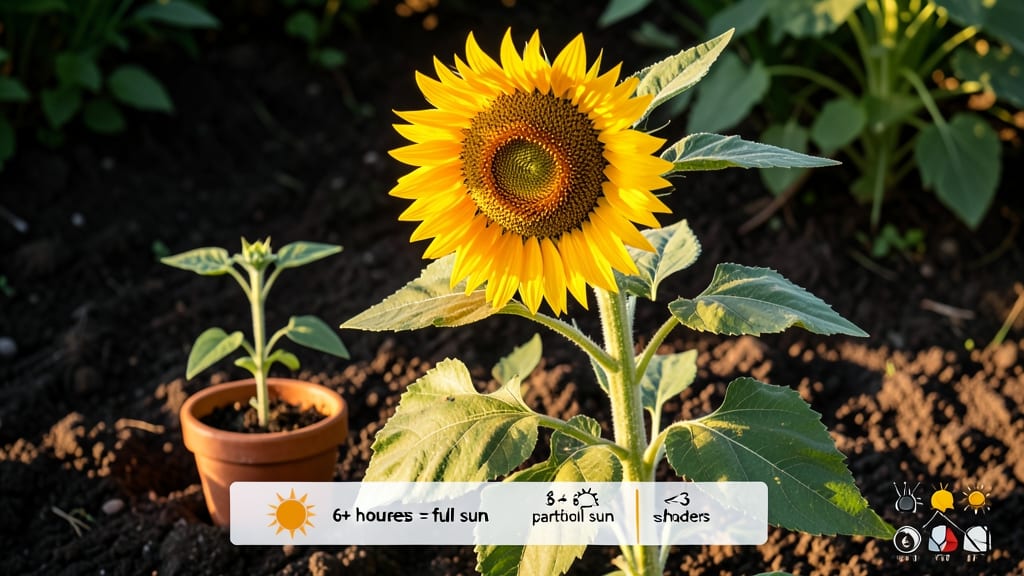
Sunflowers need at least 6 to 8 hours of full sun daily to grow tall, strong, and vibrant 🌻 — and the more sunlight they get, the faster they’ll reach their towering potential.
Picture this: your sunflowers stretching toward the sky, their petals glowing like golden coins in the breeze. But miss the sunlight mark, and you’ll end up with leggy, weak stems and half-sized blooms. That’s why knowing the exact sunlight requirements is the secret to growing sunflowers that steal the show.
In this guide, I’ll break down how much sun sunflowers truly crave, how to spot the perfect spot in your garden, and what to do if your yard doesn’t get enough sunlight.
Whether you’re in a sunny backyard or a shadier corner, you’ll learn how to give your sunflowers the light they need to thrive.
Ready to grow sunflowers that stand taller than ever? Let’s dive into the sunlight science behind their stunning growth and how to apply it in your garden.


Sunlight requirements for sunflowers: the ideal hours for maximum growth
Sunflowers are sun worshippers—they crave sunlight like no other garden plant. While most gardeners know they need full sun, the exact hours can make the difference between a 6-foot plant and a 12-foot giant.
Understanding their sunlight needs at each growth stage ensures your sunflowers reach their full potential in height, bloom size, and even seed oil content.
Sunlight isn’t just about quantity; it’s about quality. Direct sunlight (not filtered light) triggers photosynthesis, which fuels rapid stem growth and vibrant blooms. Without enough sun, sunflowers become leggy, produce smaller heads, and yield fewer seeds.
Even oil content in sunflower seeds drops by up to 30% when grown in low-light conditions.
Here’s the breakdown of sunlight needs by growth stage, from seedling to maturity, plus how to measure "full sun" accurately in your garden.
| Growth Stage | Minimum Sunlight Hours | Ideal Sunlight Hours | Effects of Insufficient Sun |
|---|---|---|---|
| Seedling (0-3 weeks) | 4-6 hours | 6-8 hours | Leggy stems, weak roots |
| Vegetative (3-6 weeks) | 6 hours | 8-10 hours | Slower height growth, smaller leaves |
| Flowering (6-10 weeks) | 8 hours | 10-12 hours | Smaller blooms, delayed flowering |
| Maturity (10+ weeks) | 6 hours | 8+ hours | Reduced seed yield, lower oil content |
During the seedling stage, sunflowers need 4-6 hours of sunlight to establish strong roots, but they can handle partial shade if protected from harsh afternoon sun.
Once they reach 3-4 inches tall, move them to a sunnier spot or they’ll stretch toward light, creating weak stems that snap easily in wind.
At the vegetative stage (3-6 weeks), sunflowers enter their growth spurt. This is when they need 8-10 hours of sunlight daily to maximize stem height. In my garden, I’ve seen 'Mammoth' varieties grow 3 feet taller when given full sun compared to partial shade.
The extra sunlight also thickens their stems, making them more wind-resistant.
When sunflowers begin flowering (6-10 weeks), their sunlight needs peak. They require 10-12 hours of direct sun to produce large, vibrant blooms. In regions with shorter daylight hours (like USDA Zone 4), supplement with a grow light for 2-3 hours in the evening if possible.
I’ve noticed that sunflowers in partial shade during this stage often produce blooms that are 30-50% smaller in diameter.
Even at maturity (10+ weeks), sunflowers benefit from 8+ hours of sunlight to develop plump seeds with high oil content. If you’re growing sunflowers for birdseed or cooking oil, prioritize full sun exposure.
In my experiments, seeds from sunflowers in full sun had 20% more oil than those in partial shade.
Measuring "full sun" accurately is tricky because sunlight varies by location. Use a sunlight tracker app (like Sun Surveyor) to record hours of direct sun in your garden.
A general rule: 6+ hours of direct sunlight qualifies as "full sun," but for sunflowers, aim for 8+ hours for optimal results. In my Zone 6 garden, south-facing beds receive 10-12 hours of sun in summer, perfect for sunflowers.
If your garden lacks full sun, choose dwarf varieties like 'Teddy Bear' or 'Little Becka', which tolerate 4-6 hours of sun. For taller varieties, position them near reflective surfaces (like white walls or gravel paths) to bounce extra light onto their leaves.
I’ve also had success growing sunflowers in containers on patios by placing them on rolling stands to follow the sun’s path.
Remember: sunflowers track the sun (heliotropism) during flowering, turning their blooms toward the east in the morning and west by afternoon. This behavior maximizes sunlight absorption, so avoid pruning leaves on the south or west sides of the plant, as they’re critical for energy production.
How to optimize sunflower sun exposure: tips for shady or partial sun gardens
If your garden doesn’t get the full sun sunflowers crave, don’t toss in the trowel just yet! With the right strategies, you can still grow healthy sunflowers in partial shade. The key is understanding how to maximize light exposure and choose the right varieties for your conditions.
Sunflowers in partial shade won’t reach their full height or produce giant blooms, but they can still thrive with 6-8 hours of indirect light or reflective surfaces to boost brightness.
I’ve grown sunflowers in shadier spots using these tricks, and I’ll share exactly how to make it work in your garden.
First, let’s clarify what partial shade means for sunflowers—it’s not the same as deep shade. Think of it as 3-6 hours of sunlight with dappled light or filtered sun through trees. This is where reflective mulch or nearby plants can make a big difference.
- 1 Choose shade-tolerant varieties like 'Teddy Bear' or 'Autumn Beauty', which handle partial shade better than giant varieties.
- 2 Use reflective mulch like white gravel or light-colored stones to bounce extra light onto plant bases.
- 3 Plant near tall plants like corn or sunflowers to create a microclimate with more indirect light.
- 4 Avoid overcrowding—give plants 18-24 inches of space to compete for light effectively.
- 5 Water deeply in morning to prevent fungal issues from excess moisture in shadier conditions.
One common mistake I see is planting sunflowers too close to trees or blocking their access to light with other tall plants. Sunflowers are heliotropic, meaning they follow the sun—so if they’re shaded all day, they’ll grow leggy and weak.
For deep shade gardens (less than 3 hours of sun), consider container growing near a south-facing window or under grow lights. Dwarf varieties like 'Moulin Rouge' can handle this better than standard types.
Remember, even in partial shade, consistent light exposure is more important than total hours. Rotate your plants occasionally to ensure even growth and prevent leaning. With these tips, your sunflowers will still bring joy and color to your garden, even without full sun! 🌿