
Flowers
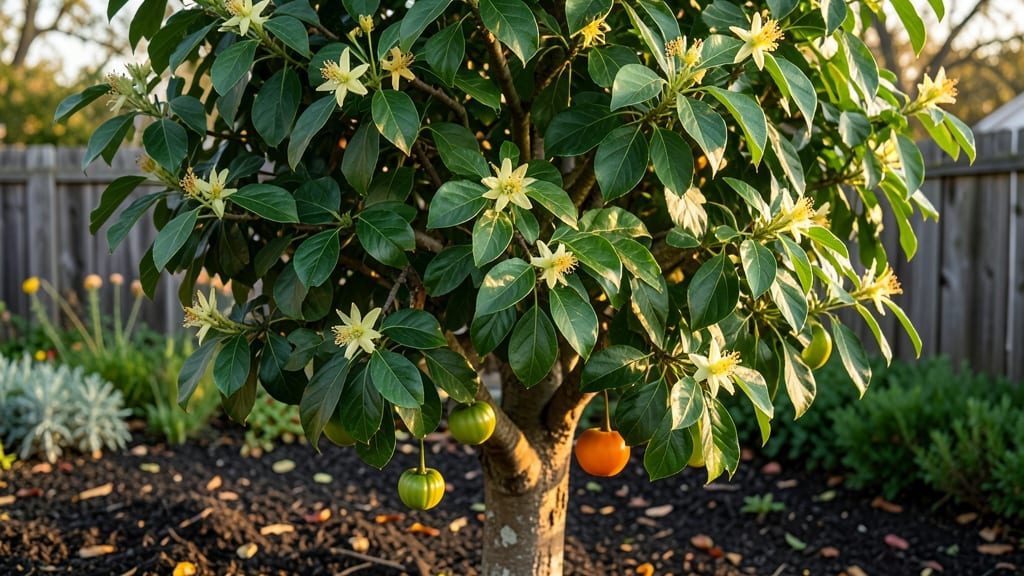
Transforming a persimmon flower 🍑 into sweet, ripe fruit is a gardener’s patience test—and the secret to a heavy harvest lies in understanding every stage.
Picture this: vibrant blossoms in spring, only to watch them fade without a single fruit forming. It’s frustrating, but the good news? With the right timing, care, and a few pro tips, you can turn that disappointment into a tree loaded with fruit by fall.
From pollination to harvest, persimmons demand full sun, consistent moisture, and just the right balance of nutrients. Skip one step, and you might end up with blossoms but no fruit—or worse, fruit that drops before it ripens.
In this guide, I’ll walk you through the critical stages of persimmon development, how to boost pollination, and the common mistakes that kill fruit set.
By the end, you’ll know exactly what your tree needs to go from flower to fruit—and why some years are bountiful while others leave you scratching your head.
The 5 stages of persimmon flower to fruit development (with critical timing)
Persimmon trees go through a fascinating transformation from delicate spring blossoms to sweet, harvest-ready fruit, but each stage requires specific conditions to succeed. Understanding these phases helps you anticipate care needs, spot problems early, and maximize your fruit set.
Whether you're dealing with Asian persimmons (Diospyros kaki) or American persimmons (Diospyros virginiana), the process follows a predictable timeline—if you know what to watch for.
The journey begins with flower bud formation in late winter, peaks with pollination in spring, and culminates in fruit ripening by fall. Each stage has critical timing windows where temperature, moisture, and even wind patterns can make or break your harvest.
Let’s break down what happens—and what you can do—to ensure your persimmon tree thrives at every step.
Flower Bud Formation (Late Winter)
Bud development starts in January-February when days lengthen. Look for swollen buds along branches—these will burst into flowers in 3-4 weeks if temperatures stay above 40°F. Cold snaps below 28°F can damage buds, reducing next year’s fruit.
Blooming & Pollination (April-May)
Flowers open in April-May, with male and female flowers often on separate trees (dioecious varieties). Bees and wind handle pollination, but humidity below 50% or wind gusts over 15 mph can hinder success. Hand-pollinate if needed using a soft brush.
Fruit Set (Late May-June)
Pollinated flowers develop into tiny green fruits (pea-sized) in 4-6 weeks. This is the most vulnerable stage—fruit drop occurs if temperatures exceed 90°F or soil moisture drops below 30%. Thin fruits to 6 inches apart to prevent overcrowding.
Rapid Growth (July-August)
Fruits grow 1-2 inches per week during peak summer. Monitor for pests (aphids, borers) and diseases (anthracnose). Maintain consistent watering (1-2 inches per week) and apply potassium-rich fertilizer to prevent cracking.
Ripening (September-October)
Fruits turn deep orange and soften by fall. Astringent varieties (Hachiya) must be fully ripe (soft like butter) to eat, while non-astringent (Fuyu) can be harvested firmer. Watch for first frost—harvest before 28°F temperatures arrive.
Each stage demands attention to temperature, moisture, and pest control. For example, stage 2 (pollination) is critical—if bees avoid your tree, hand-pollination with a soft paintbrush can save your crop.
Similarly, stage 3 (fruit set) is where many gardeners lose fruits due to heat stress or drought. By understanding these phases, you’ll catch issues early and enjoy a bountiful persimmon harvest.
Pro tip: Keep a gardening journal to track your tree’s progress. Note when buds swell, flowers open, and fruits set—this helps you adjust care for next year.
For instance, if your tree drops fruit in stage 3, you may need to increase shade cloth during heatwaves or mulch heavily to retain moisture.
Common bottlenecks include poor pollination (leading to no fruit), fruit drop (from heat or drought), and pest damage (like borers). Address these early by encouraging pollinators, watering deeply, and inspecting leaves weekly.
With the right care, your persimmon tree will reward you with juicy, sweet fruit every fall.
Remember, Asian persimmons (like Fuyu) ripen faster (180-240 days) than American persimmons (240-300 days). Adjust your expectations based on your variety—some may need an extra month to mature. The key is patience and observation at each stage.
🌱
How to maximize persimmon fruit set: pollination secrets and pro tips
Persimmons are finicky about fruit set—abundant flowers don’t always mean a heavy harvest. The secret lies in understanding their pollination requirements and providing the right conditions for fruit to develop.
Unlike many fruit trees, persimmons rely on a combination of natural pollinators and environmental factors to transition from blossoms to fruit.
Even with perfect blooms, many gardeners face the frustrating issue of fruit drop shortly after pollination. This usually happens when trees lack adequate nutrients, suffer from environmental stress, or experience poor pollination. The good news? With a few targeted strategies, you can dramatically improve your tree’s success rate.
⚠️ The #1 Mistake Killing Your Persimmon Fruit Set
Over-fertilizing with nitrogen in spring causes excessive leafy growth at the expense of fruit development. Persimmons need a balanced NPK ratio (10-10-10) with slightly more phosphorus to support flowering and fruiting. Too much nitrogen = more leaves, fewer fruits.
🌱 Fix it: Switch to a low-nitrogen fertilizer (like 5-10-10) when flowers appear, and reduce applications after harvest.
Hand-pollination is your best friend when natural pollinators like bees are scarce. Persimmon flowers are self-compatible, meaning a single tree can pollinate itself, but wind and insects often fail to do the job efficiently.
Grab a soft paintbrush or cotton swab and gently transfer pollen from one flower’s male stamens to another’s female stigma on calm, dry mornings.
Soil health plays a critical role in fruit retention. Persimmons thrive in well-draining, slightly acidic soil (pH 6.0-7.0). Conduct a soil test in early spring—if your soil is too alkaline, amend it with sulfur or peat moss.
Mulch heavily around the base with wood chips or compost to retain moisture and regulate soil temperature, which prevents premature fruit drop.
Watering habits matter just as much as pollination. Persimmons need deep, infrequent watering (1-2 inches per week) during fruit development. Shallow watering stresses the tree and leads to fruit abortion.
Use drip irrigation or soaker hoses to deliver water directly to the roots, avoiding wetting the foliage to prevent fungal diseases like anthracnose, which weakens fruit set.
Finally, prune strategically to improve air circulation and sunlight penetration. Remove water sprouts and crossing branches in late winter to redirect the tree’s energy toward fruit production. Thin out overly dense areas where humidity lingers—this reduces disease pressure and helps fruits develop evenly.