
Planting
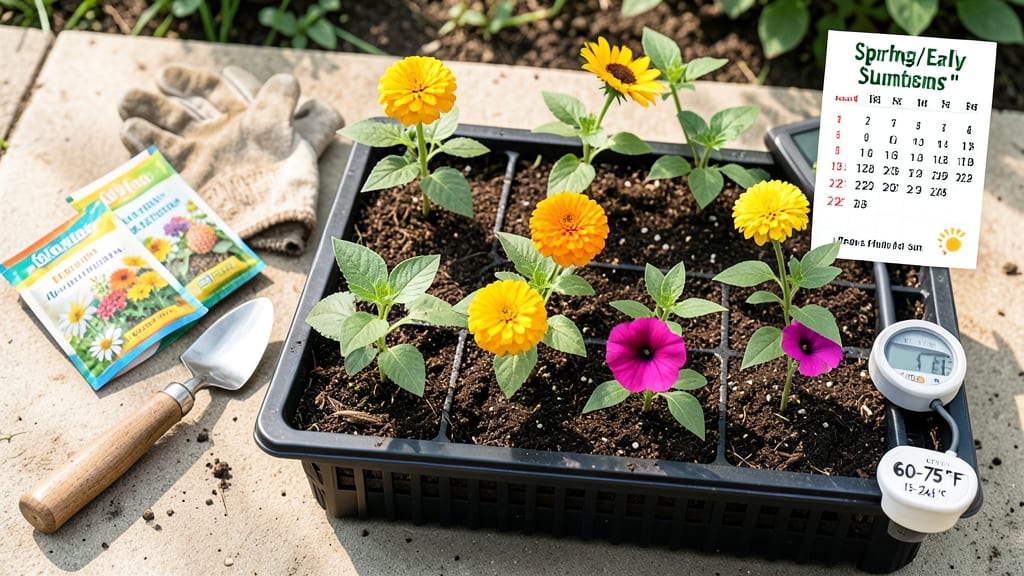
Planting flower seeds at the right time ensures vibrant blooms all season long 🌸 — and missing that window can leave you staring at empty soil instead of a garden bursting with color.
Timing is everything, especially when you’ve got 60 days until your first frost or a 90-day bloom cycle to work with. Get it wrong, and your dream garden could end up as a sad, half-hearted attempt.
But with the right USDA zone deadlines, you’ll know exactly when to start seeds indoors or sow them directly outside for maximum impact.
Whether you’re in Zone 6a or a warmer climate, this guide breaks down the best months for spring and fall planting, plus how to adjust for early or late bloomers. No more guessing—just a foolproof schedule tailored to your location.
You’ll also discover the top 5 fast-germinating flowers for last-minute planting, so even if you missed the ideal window, you can still fill your garden with beauty. Let’s get those seeds in the ground the right way!

USDA Zone deadlines for planting flower seeds by season
Timing your flower seed planting is everything—plant too early, and frost will kill tender seedlings; too late, and you’ll miss the bloom window entirely. The key lies in understanding your USDA zone and whether you’re growing cool-season or warm-season flowers.
Each zone has critical deadlines tied to last frost dates and soil temperatures, which vary dramatically from Zone 3’s harsh winters to Zone 11’s year-round warmth.
Cool-season flowers like pansies and snapdragons thrive in 50–65°F soil and can handle light frosts, while warm-season beauties such as marigolds and sunflowers need 60–85°F soil and won’t germinate until danger of frost has passed.
Below, I’ve broken down the planting deadlines for each USDA zone, so you can align your garden calendar with nature’s rhythm.
For Zone 3–4 gardeners, the window is tight—cool-season flowers must be in the ground by April 15 at the latest, while warm-season varieties can’t go in until mid-May when soil warms.
In contrast, Zone 9–11 offers flexibility: you can plant cool-season flowers in late summer for fall blooms or sow warm-season seeds year-round, though summer heat may require shade cloth.
Pro tip: Use soil thermometers to confirm readiness—seeds won’t germinate until soil hits their ideal temperature. For example,
How to adjust planting times for early or late blooms
If you want longer bloom seasons, you’ll need to think beyond the standard planting window. In Zone 5, for example, a late frost can delay outdoor planting by weeks, while Zone 10 gardeners might face heat stress if they wait too long.
The key is flexibility—using succession planting, indoor starts, and heat-tolerant varieties to stretch your blooms from spring to frost.
Start by identifying your last frost date and first frost date—these are your anchors. For early blooms, begin indoor seed starts 6-8 weeks before the last frost.
In colder zones, this might mean starting marigolds or snapdragons in late winter, while warmer zones can direct-sow cosmos or zinnias as early as February.
For late-season color, focus on heat-loving annuals like portulaca or sunflowers, which thrive in summer’s intensity. In Zone 5, you can even extend blooms by planting cool-season flowers like pansies in late summer for fall displays.
🌱 Key Takeaway: Adjusting Planting Times for Early/Late Blooms
| Strategy | Best For | Example Plants |
|---|---|---|
| Indoor Starts | Early blooms in cold zones | Petunias, geraniums |
| Succession Planting | Continuous blooms | Zinnias, cosmos |
| Heat-Tolerant Varieties | Late-season color | Portulaca, sunflowers |
💡 Pro Tip: Use row covers in early spring or shade cloth in summer to protect tender seedlings and extend planting windows.
Another trick is staggered planting. Instead of sowing all your seeds at once, plant every 2-3 weeks for a steady stream of blooms.
This works especially well with fast-growing annuals like bachelor’s buttons or nasturtiums, which can go from seed to flower in as little as 45 days.
For Zone 10 gardeners, the challenge is often avoiding summer heat stress. Plant shade-tolerant flowers like impatiens or fuchsias under trees, and opt for evening-blooming varieties like moonflowers to escape the midday sun.
In contrast, Zone 5 gardeners should prioritize cold-hardy perennials like coneflowers or black-eyed Susans, which can handle early frosts.
Don’t forget to adjust for microclimates in your garden. A south-facing wall might be 5-10°F warmer than the rest of your yard, allowing you to plant 2-3 weeks earlier in spring or 2 weeks later in fall. Use these pockets of warmth to your advantage for extended bloom seasons.