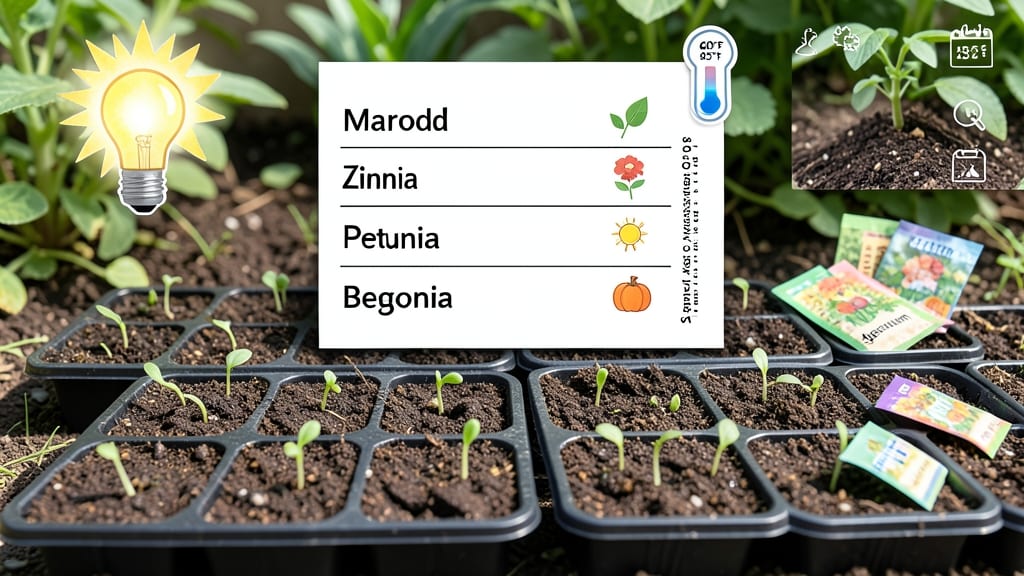
Starting flower seeds indoors using a when to start flower seeds indoors chart 6–8 weeks before your last frost is the secret to a summer garden bursting with color 🌸 — but get the timing wrong, and you’ll either have sad, leggy seedlings or flowers that bloom too late to enjoy.
Picture this: you’ve spent weeks nurturing delicate seedlings, only to watch them bolt in the heat or fizzle out before they even get a chance to bloom. That’s the frustration of guessing your seed-starting schedule instead of following a proven chart tailored to your zone.
This chart breaks down the exact weeks before last frost to start popular flowers like marigolds, pansies, and sweet peas, plus how to adjust for early blooms or late seasons. Whether you’re in chilly Zone 5 or mild Zone 10, you’ll know exactly when to plant for vibrant summer color.
Inside, you’ll find a printable timeline, pro tips for extending seasons, and troubleshooting fixes—so you can finally say goodbye to wasted effort and hello to a garden that wows all season long.
Zone-specific flower seed starting timeline chart (weeks before last frost)
Getting your flower seeds indoors at the right time ensures vibrant blooms when you need them most. But timing varies dramatically—cool-season flowers like pansies thrive with early starts, while heat-lovers such as impatiens need a later kickoff.
This chart breaks down the ideal indoor seed-starting windows for 10+ popular flowers across USDA Zones 3-10, so you can plan with confidence.
I’ve organized the chart by flower type (annuals, perennials, and bulbs) and color-coded it for quick reference. Cold-hardy varieties like sweet peas and snapdragons get their own row, while tender annuals like zinnias and marigolds have separate timing.
Each cell shows weeks before last frost to start seeds indoors, adjusted for your zone’s typical frost date.
Pro tip: Use a seed-starting heat mat for slower germinators (like lobelia) and keep seedlings under grow lights for 14–16 hours daily to prevent leggy growth. Now, let’s dive into the chart—print it out and mark your calendar!
🌱
| Flower |
Zone 3-4 |
Zone 5-6 |
Zone 7-8 |
Zone 9-10 |
Notes |
| 🌷 Pansies |
10-12 wks |
8-10 wks |
6-8 wks |
4-6 wks |
Cold-hardy; direct sow in fall for spring blooms. |
| 🌼 Sweet Peas |
10-12 wks |
8-10 wks |
6-8 wks |
Direct sow |
Needs cold stratification; sow early. |
| 🌻 Marigolds |
6-8 wks |
4-6 wks |
3-4 wks |
Direct sow |
Fast grower; can direct sow after frost. |
| 🌹 Impatiens |
8-10 wks |
6-8 wks |
4-6 wks |
3-4 wks |
Heat-sensitive; avoid late starts. |
| 🌼 Zinnias |
8-10 wks |
6-8 wks |
4-6 wks |
How to adjust your seed starting schedule for early or late blooms
Getting your flower seeds timed just right for early blooms or extended fall color takes some flexibility. The key is understanding how last frost dates and plant maturity work together.
For example, pansies and sweet peas can handle cooler temps, so you can start them 10-12 weeks before frost for spring color. Meanwhile, marigolds or zinnias thrive in warm soil—delay their start until 6-8 weeks before frost to avoid bolting too early.
Unpredictable weather adds another layer. If your last frost keeps shifting later, you might need to extend your grow lights or use heat mats to keep seedlings on track.
Conversely, if frost comes early, hardy annuals like calendulas or nasturtiums can often handle a light freeze, giving you a second chance for fall blooms.
Here’s how to fine-tune your schedule for early or late blooms without guesswork:
-
1. Start cool-season flowers early
Pansies, snapdragons, and sweet peas: 10-12 weeks before last frost for spring blooms.
-
2. Delay warm-season flowers
Marigolds, zinnias, and sunflowers: 6-8 weeks before frost for summer/fall color.
-
3. Use grow lights for early starts
Extend daylight to 14-16 hours if starting 8+ weeks early.
-
4. Harden off gradually
Acclimate seedlings to outdoor temps 1-2 weeks before transplanting.
-
5. Adjust for late frosts
Choose cold-tolerant varieties (e.g., stocks, dianthus) if frost delays planting.
For early blooms, I like to start pansies in January (Zone 5) under grow lights to ensure they’re ready by Mother’s Day. If you’re aiming for fall color, hold off on marigolds until June—this gives them time to mature before cooler temps set in.
Always check your seed packet for days to maturity and adjust accordingly.
Pro tip: Keep a gardening journal to track your last frost dates over the years. This helps you spot trends and fine-tune your schedule. For example, if your last frost typically arrives 2 weeks later than the average, plan to start seeds 2 weeks earlier to stay on schedule.
Don’t forget that container gardening can also influence timing. Potted plants warm up faster in spring, so you might transplant 1-2 weeks earlier than in-ground gardeners. Conversely, heavy soils delay warming, so adjust your seed-starting window accordingly.
With these adjustments, you’ll avoid the heartbreak of late blooms or wilted seedlings—and enjoy a garden bursting with color from spring to fall! 🌷
★★★★★4.7(7 reviews)
|