
Watering
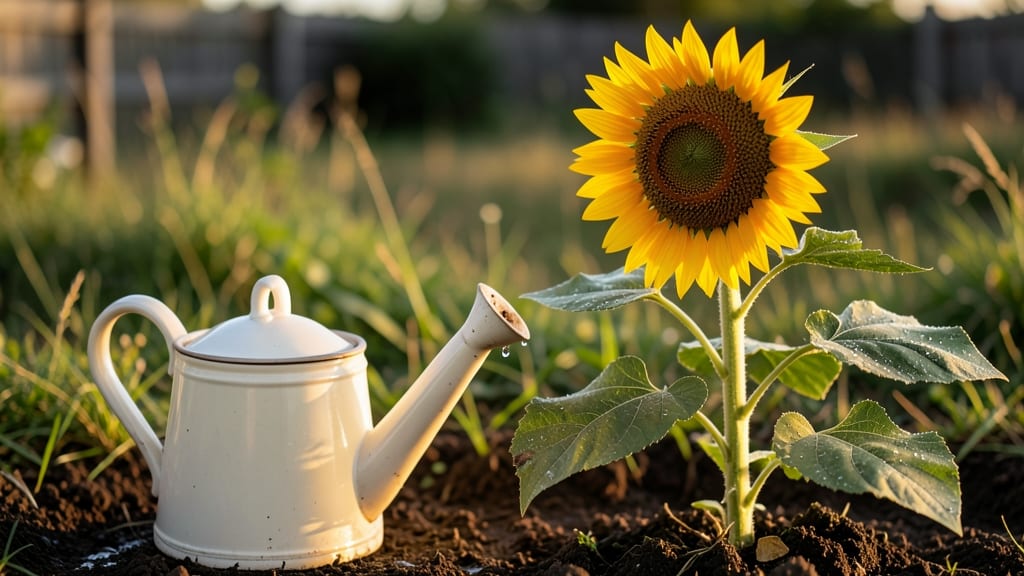
Your sunflowers' water needs are the secret to those towering 🌻 blooms—and getting it wrong means drooping stems before they even reach their full height.
Picture this: You’ve spent weeks nurturing your seedlings, only to watch them wilt under the midday sun because you assumed "more water = better." The truth? Sunflowers demand deep, infrequent hydration, not constant puddles. Their roots dive 3–4 feet into the soil, so surface watering just confuses them.
In this guide, I’ll break down the exact watering schedule for each growth stage—from seedlings to seed heads—plus how to spot the subtle signs of thirst (or overwatering) before it’s too late.
You’ll learn when to water (morning > evening, always), how much (think 1–2 gallons per plant in dry spells), and why skipping water on mature sunflowers can actually help them survive droughts. No guesswork, just science-backed tips to keep your giants standing tall.


How much water sunflowers need by growth stage (with exact measurements)
Sunflowers are deep-rooted champions that can reach 6 feet underground—but their water needs change dramatically as they grow. Underwatering stunts their towering ambitions, while overwatering drowns their roots in soggy soil.
Let’s break down the precise water requirements at each growth stage, so your sunflowers drink just enough to shine bright and tall.
From tiny seedlings to massive blooms, sunflowers demand different hydration levels. Climate plays a huge role: in dry regions like Arizona, you’ll water twice as often as in humid areas like Louisiana.
Below, I’ll share exact measurements—including gallons per plant—and adjust for your local conditions to keep your sunflowers thriving.
Pro Tip: Always water at the base of the plant, not overhead, to prevent fungal diseases like powdery mildew. Use a moisture meter or the finger test (stick your finger 2 inches deep—if dry, water!).
| Growth Stage | Water Frequency | Gallons per Plant | Soil Moisture Target | Climate Adjustments |
|---|---|---|---|---|
| Seedling (0-2 weeks) | Every 2-3 days | 0.25–0.5 gallons | Keep soil consistently moist | Dry climates: daily; humid: every 3 days |
| Vegetative (2-6 weeks) | Every 3-5 days | 0.75–1.5 gallons | 1–2 inches deep moisture | Hot/dry: every 2 days; cool/humid: weekly |
| Flowering (6-10 weeks) | Every 4-7 days | 1.5–3 gallons | Deep, thorough saturation | Drought: daily; rain: reduce by 50% |
| Maturity (10+ weeks) | Every 7-14 days | 0.5–1 gallon | Let topsoil dry slightly | Rainy seasons: skip watering |
During the seedling stage, sunflowers need gentle but frequent watering to establish roots. Overhead watering can wash away seeds or cause damping-off disease.
Use a spray nozzle or drip irrigation to deliver water directly to the soil. Mulch with straw to retain moisture and suppress weeds, which compete for water.
As sunflowers enter the vegetative stage (2–6 weeks), their roots dive deeper, but they still need consistent moisture. Underwatering now leads to stunted growth, while overwatering causes yellowing leaves and root rot.
Aim for 1–2 inches of soil moisture at all times. In hot climates, water in the early morning to reduce evaporation.
The flowering stage (6–10 weeks) is the most critical for water. Sunflowers need 1.5–3 gallons per plant every 4–7 days, depending on heat. Skipping water here shrinks blooms and reduces seed production. Drip irrigation is ideal—it delivers water slowly to the roots without wetting leaves, which prevents fungal issues.
Once sunflowers reach maturity (10+ weeks), their water needs dramatically drop. At this point, they’re drought-tolerant and only need water if the soil is bone-dry. Overwatering mature plants can split seed heads or encourage mold. Reduce frequency to every 10–14 days or rely on natural rainfall.
For container-grown sunflowers, water daily in summer—small pots dry out 3x faster than in-ground plants. Use a self-watering planter or check soil moisture twice daily. In clay soil, water less often (it retains moisture longer), while sandy soil drains quickly, requiring more frequent watering.
Watch for wilting leaves or yellowing stems—these are red flags. Wilting in the morning means underwatering; wilting at night signals overwatering. Adjust your schedule based on your sunflowers’ signals and your local humidity levels.
With the right watering routine, your sunflowers will reward you with vibrant blooms and bountiful seeds.
🌻
Sunflower watering schedule: when, how often, and what to avoid
Sunflowers may look like they’re built to withstand drought, but their deep taproots actually demand consistent moisture to reach their full height and vibrant blooms. The key is deep, infrequent watering—not daily light sprinkles—that encourages roots to grow downward.
I’ve learned the hard way that overwatering can drown these giants just as quickly as underwatering can stunt them.
Timing matters just as much as quantity. Watering at the wrong time of day—like evening—can leave moisture on leaves, inviting fungal diseases. Meanwhile, shallow watering only wets the topsoil, forcing roots to stay near the surface where they dry out faster.
Let’s break down the exact schedule and critical mistakes to avoid for sunflowers that thrive from seedling to seed head.
- Evening watering → Fungal diseases like powdery mildew.
- Shallow watering → Roots stay near surface, increasing drought stress.
- Overwatering → Yellow leaves, root rot, and stunted growth.
Your local climate will dictate slight adjustments to this schedule. In hot, dry regions like Arizona or California, I water sunflowers every 2-3 days in summer, while in humid climates like the Pacific Northwest, weekly watering often suffices.
Always check the top 2 inches of soil—if it’s dry, it’s time to water.
Mulching is a game-changer for sunflowers. A 3-inch layer of straw or wood chips retains moisture, regulates soil temperature, and suppresses weeds. I apply mulch after seedlings emerge to keep roots cool and hydrated, especially during peak summer heat.
This simple step can cut your watering frequency by 30%.
Watch for wilting leaves that don’t perk up after watering—a classic sign of underwatering. Conversely, yellowing leaves paired with mushy stems signal overwatering. Both issues are fixable, but prevention through proper scheduling saves time and heartache.
Stick to the morning deep-soak method, and your sunflowers will reward you with taller stems and bigger blooms.
Pro tip: Collect rainwater in barrels for sunflowers—it’s naturally pH-neutral and free of chemicals found in tap water. My sunflowers grown with rainwater consistently outperform those watered with tap, thanks to the gentler hydration and reduced salt buildup.
Give it a try, and you’ll notice the difference in just a few weeks! 💧🌻