
Flowers
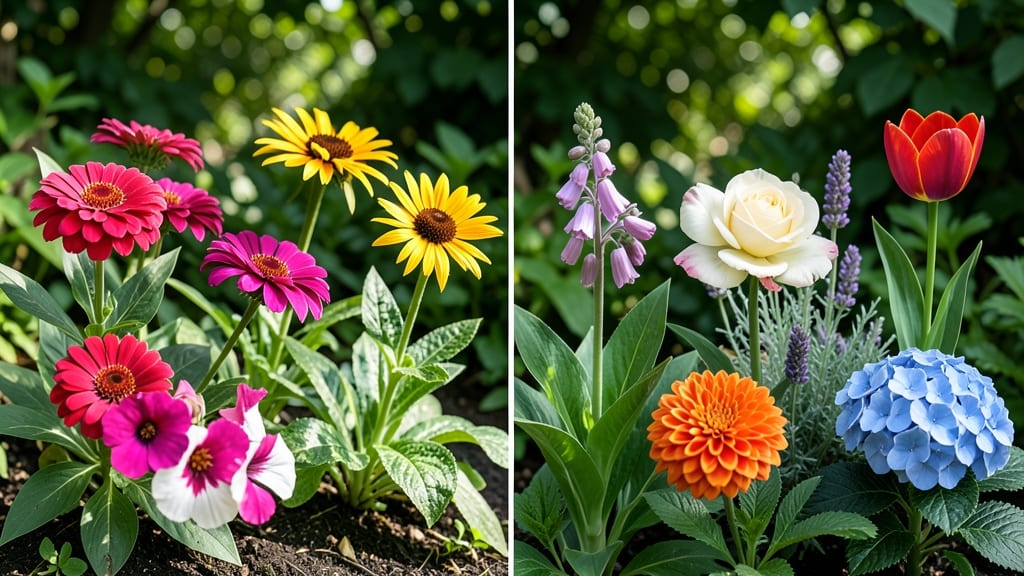
Exploring the different types of flowers is like opening a palette of nature’s most vibrant artistry—each bloom offering a unique hue, texture, and seasonal moment.
Picture this: a spring garden bursting with delicate tulips, followed by sun-drenched zinnias in summer, then fiery mums as autumn arrives. The key to a garden that never looks tired? Mixing annuals for bold pops, perennials for reliability, and bulbs for early bursts of color.
Whether you’re dreaming of a pollinator paradise or a low-maintenance border, the right flower combinations can transform even a small space into a year-round showstopper. I’ll break down the best pairings by season, height, and care level—so you can skip the guesswork and start planting with confidence.
From shade-loving impatiens to drought-tolerant lavender, you’ll discover which flowers thrive together (and which to avoid) for a garden that’s as easy to maintain as it is stunning. Let’s get started!
12 Major flower categories by growth habit and seasonal blooms
Understanding the 12 major flower categories helps you create a garden that blooms beautifully year-round. Each type—from annuals to bulbs—offers unique benefits, like seasonal color shifts or low-maintenance charm.
I’ve grown everything from sun-loving zinnias to shade-tolerant hellebores, and the right mix keeps my garden vibrant through all four seasons.
Annuals like marigolds and petunias deliver instant color but need replanting yearly. Perennials such as coneflowers and black-eyed Susans return every season, while biennials like foxgloves take two years to bloom. Don’t forget spring bulbs like tulips—they’re the first to wake up and bring cheer after winter’s dormancy.
Below, I’ve organized these categories by growth habit and seasonal blooms, including ideal planting months and care tips. This ensures you’ll have flowers from early spring through late fall, even in colder climates.
For example, spring bulbs like daffodils and crocuses bloom early, while summer bulbs such as dahlias shine in late-season gardens. Pairing annuals like cosmos with perennials like lavender ensures continuous blooms—cosmos self-seed for next year, while lavender’s fragrance attracts pollinators.
My low-maintenance tip: Plant perennials in borders and annuals in containers for easy swaps. This way, you can refresh colors yearly without replanting everything. For instance, swap out spring pansies for fall mums in the same pots—both thrive in similar conditions.
Seasonal transitions are key! Biennials like sweet william need two years to mature, so plant them in late summer for next spring’s blooms. Meanwhile, climbing roses (a perennial) bloom from
Seasonal color palette guide: best flowers for spring, summer, fall, and winter gardens
Creating a garden that bursts with color year-round requires strategic planning based on seasonal blooms. Each season offers unique flower varieties that thrive under specific conditions, from frost-hardy perennials to drought-resistant annuals.
I’ve curated my favorite seasonal flowers that will keep your garden vibrant, whether you’re in a warm climate or a cold one.
For spring gardens, focus on early bloomers like tulips and daffodils, which tolerate cooler temperatures and brighten up the landscape after winter. In summer, sun-loving flowers like zinnias and marigolds take center stage, while fall brings rich hues from chrysanthemums and asters.
Even winter gardens can shine with evergreens and hellebores that brave the cold.
Here’s my numbered guide to the best seasonal flowers for each time of year, including shade-tolerant, drought-resistant, and frost-hardy options:
- 1. Spring: Tulips and daffodils (frost-hardy, full sun), bleeding heart (shade-tolerant), pansies (drought-resistant).
- 2. Summer: Zinnias (drought-resistant, full sun), lilies (fragrant, shade-tolerant), sunflowers (tall, pollinator-friendly).
- 3. Fall: Chrysanthemums (late bloomers, frost-hardy), asters (wildflower look), sedum (drought-resistant, succulent-like).
- 4. Winter: Hellebores (shade-tolerant, evergreen), winter jasmine (fragrant, frost-hardy), snowdrops (early bloomers).
For shade gardens, consider bleeding heart, hostas, and impatiens, which thrive in low-light conditions. If you’re in a drought-prone area, opt for lavender, yarrow, and salvia, which require minimal water once established.
In cold climates, coneflowers and black-eyed Susans are hardy perennials that return year after year.
Mixing annuals and perennials ensures continuous blooms, while bulbs like tulips and crocuses provide early-season color. I love pairing tall flowers like delphiniums with low-growing varieties such as alyssum for a balanced look. Don’t forget to include pollinator-friendly flowers like bee balm and coneflowers to attract beneficial insects.
With this seasonal guide, your garden will stay lively and colorful no matter the weather. Start by planting spring bulbs in fall, then layer in summer annuals and fall perennials for a seamless transition. Happy gardening! 🌷