
Planting
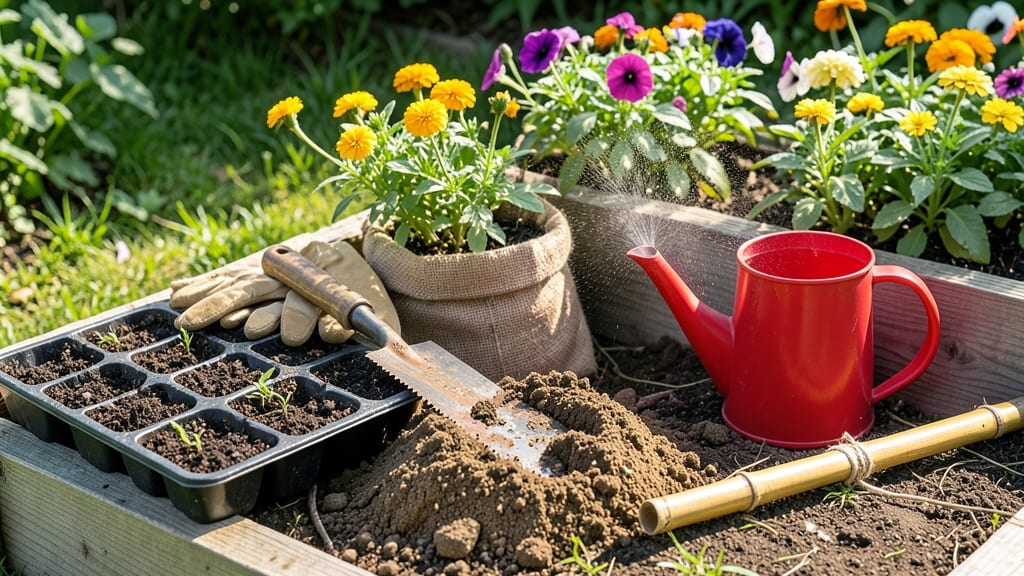
Transplanting flower seedlings at the right time ensures they thrive 🌸—not too early, not too late, but when they’re ready to take root in your garden.
Picture this: you’ve nurtured your delicate seedlings indoors, only to rush them outside too soon. A late frost or chilly night can shock them, stunting growth or worse. But get the timing right, and you’ll see stronger roots, faster blooms, and a garden that bursts with color.
Most gardeners focus on the calendar, but the key is watching for those true leaves—the second set after the initial seed leaves. Combine that with soil warmth and a hardening-off period, and you’ve got the perfect recipe for success.
In this guide, I’ll walk you through the exact steps—from checking leaf stages to moon phase tips and weather prep—so your flower seedlings make the transition without a hitch.


The true-leaf stage: how many leaves signal transplant readiness
Transplanting flower seedlings too soon can shock their delicate root systems, while waiting too long risks overcrowding and stunted growth. The key to success lies in understanding the true-leaf stage—when seedlings develop their first set of real leaves (not the initial cotyledons).
These true leaves indicate the plant has enough energy and structure to handle transplant stress.
Cotyledons, or "seed leaves," are the first leaves that appear after germination. They look simple and round, often with a slightly different shape than the plant's mature foliage. True leaves, however, are more complex, with distinct veins and shapes that match the adult plant.
For example, a tomato seedling will have oval true leaves, while petunia seedlings develop pointed, serrated edges.
Here’s the critical rule: Most flower seedlings are ready for transplant when they have 2-4 sets of true leaves, depending on the species. Vegetative plants like tomatoes and peppers can handle transplanting with just 2-3 true leaves, while delicate flowers like petunias and marigolds need 4-5 true leaves to ensure they survive the shock.
Overcrowded seedlings with fewer leaves will struggle to establish roots in their new home.
Let’s break down the ideal transplant timing for common flower types. The summary-table below highlights the leaf count, transplant window, and key considerations for popular varieties. Use this as your guide to avoid common mistakes like transplant shock or leggy seedlings that fail to thrive.
| Plant Type | True Leaves Needed | Transplant Window | Key Consideration |
|---|---|---|---|
| Tomatoes | 2-3 sets | After last frost, soil 60°F+ | Deep roots; bury stem up to first leaves |
| Petunias | 4-5 sets | When night temps stay above 50°F | Delicate stems; harden off slowly |
| Marigolds | 3-4 sets | Soil temperature 55°F+ | Fast growers; transplant early |
| Zinnias | 2-3 sets | After frost risk passes | Heat-loving; avoid cool soils |
| Pansies | 3-4 sets | Cool-season transplant | Cold-hardy; transplant earlier |
Transplanting too early—when seedlings have fewer than the recommended true leaves—can lead to root damage and poor establishment. These seedlings often develop yellowing leaves or stunted growth because their energy is focused on recovery rather than blooming.
On the flip side, waiting too long risks overcrowded seedlings competing for nutrients, resulting in weak stems and pale foliage.
For example, if you transplant tomato seedlings with only 1-2 true leaves, they may struggle to support their own weight and produce fruit. Meanwhile, petunia seedlings with fewer than 4 true leaves often wilt under outdoor conditions because their root systems aren’t strong enough to absorb water efficiently.
Always prioritize leaf count over calendar dates—your seedlings’ development is the best indicator of readiness.
To test if your seedlings are ready, gently tug on the largest leaves. If the plant resists and the soil holds the roots, it’s likely ready. If it pulls out easily, wait another week.
Also, check the stem thickness—thicker stems correlate with stronger roots. For delicate flowers like snapdragons, aim for 4-5 true leaves and a stem diameter of at least 1/8 inch.
One common mistake is confusing cotyledons with true leaves. Cotyledons are temporary and don’t perform photosynthesis like true leaves. For instance, basil seedlings might have broad cotyledons that look like true leaves, but their first true leaves are smaller and more pointed.
Always double-check by comparing the leaves to mature plant photos or asking at your local nursery.
Pro tip: If your seedlings are running late or you’re in a short growing season, consider starting with larger cells or transplanting into biodegradable pots to give them a head start. This buys extra time for root development before the final outdoor transplant.
Just remember, the true-leaf stage is your best friend—it’s nature’s way of telling you when your seedlings are ready to take on the world.
Finally, pair your leaf count check with weather conditions. Even if your seedlings have the right number of leaves, hold off if nighttime temperatures are still dipping below 50°F.
Combine the true-leaf stage with a frost-free forecast and soil warmth for the best results. Your flowers will thank you with vibrant blooms all season long! 🌸
Moon phase transplanting: does the lunar calendar really matter?
When it comes to transplanting flower seedlings, you’ve probably heard whispers about the lunar calendar—timing your work with the moon’s phases for better success. But does science back up this age-old gardening tradition?
The short answer: it’s more about practical conditions than celestial magic, though combining both can give you an edge.
Traditional lunar gardening divides the moon’s cycle into root-focused and fruit-focused phases. Root phases (when the moon is waxing) are said to boost root growth—ideal for planting.
Fruit phases (waning moon) supposedly enhance flowering and fruiting. But here’s the catch: real-world factors like soil temperature, weather, and seedling maturity often outweigh lunar influence.
That said, the moon’s gravitational pull does affect tides and plant sap flow, which might influence water uptake. Studies show mixed results—some trials confirm slight growth differences, while others find negligible impact. My advice? Use lunar timing as a secondary guide, not a rule.
Lunar Transplanting: Pros & Cons
✅ Pros
- Root growth boost: Waxing moon may enhance root development.
- Tradition-backed: Centuries of anecdotal success stories.
- Psychological prep: Encourages mindful, intentional planting.
❌ Cons
- Limited science: No conclusive proof of significant impact.
- Weather overrides: Frost or heat trumps lunar phases.
- Overcomplication: Can distract from critical prep work.
🌱 Pro Tip: Use lunar timing as a supplement to your primary checks—soil temp, seedling size, and weather forecasts.
For flower seedlings, the waxing moon (root phase) is often recommended, but I prioritize seedling maturity and soil warmth first. For example, if your petunias have 4-6 true leaves and the soil is 60°F+, transplanting during a waxing moon might give a slight edge—but only if the forecast is clear.
Here’s how to blend both approaches: Check your local lunar calendar for root phases, then verify soil temperature with a thermometer. If the moon aligns with ideal conditions (warm soil, no frost risk), go for it. If not, don’t let the phase stop you—weather and seedling readiness matter most.
Remember, the moon’s influence is subtle. Focus first on hardening off seedlings, preparing the bed, and monitoring forecasts. Then, if you’re feeling traditional, let the lunar calendar add a layer of intention to your transplanting ritual. After all, gardening is as much about connection as it is about science.