
Flowers
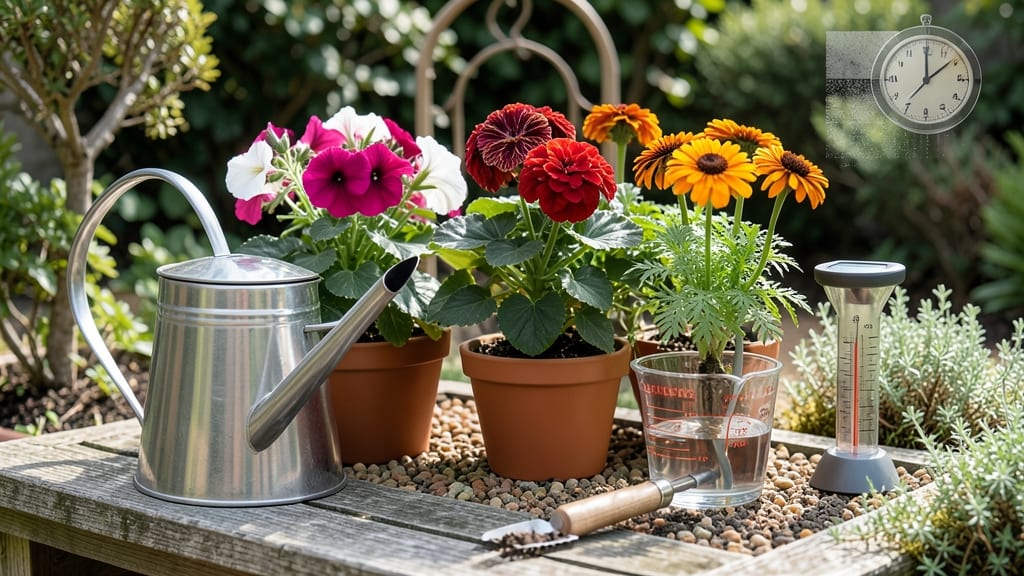
To water flowers in pots the right way, check soil moisture before your schedule says it’s time—because guessing leads to soggy roots or thirsty plants.
Overwatering kills more potted flowers than underwatering—but most gardeners get it wrong by guessing instead of testing. The secret? A simple soil-moisture method that saves water, roots, and your sanity.
Whether your 🌸 potted flowers are wilting or sitting in a puddle, the fix starts with your finger. Stick it an inch deep: dry soil means water; damp soil means wait. Pot size, sunlight, and season throw off even the best guesses.
Below, I’ll break down the exact zones to test, how often to adjust, and the 3 signs you’re watering wrong—plus a chart to match your plant’s needs to your climate.
The 3-Zone soil-moisture test for potted flowers (with visual guide)
Guessing how often to water flowers in pots leads to two deadly mistakes: root rot from overwatering or wilting from thirst. Instead, I use the 3-zone soil-moisture test to check moisture at the root level—not just the surface.
This method helps me adjust watering based on plant type, pot size, and environmental factors without wasting water or stressing my flowers.
The key is testing three zones: the top 1 inch (surface), the middle 1–2 inches (root zone), and the bottom 2–3 inches (critical for deep roots). Most gardeners only check the top layer and end up overwatering.
By testing all three zones, you’ll know exactly when to water and how much to give your potted flowers.
Here’s how it works: Insert a clean finger or a soil moisture meter into each zone. If the soil feels dry and crumbly in the middle zone, it’s time to water.
If the bottom zone is still damp, hold off—your plant has enough moisture. This simple test saves my petunias and geraniums from both underwatering and soggy soil.
Let’s break down the visual cues for each zone. The comparison table below shows what to expect at each moisture level and how to adjust your watering schedule accordingly. This is your foolproof guide to keeping potted flowers thriving without the guesswork.
| Zone | Moisture Level | Visual Cues | Watering Action | Frequency Adjustment |
|---|---|---|---|---|
| Top 1 inch | Dry | Soil feels like sand; no moisture | Water lightly | Check again in 1–2 days |
| Top 1 inch | Moist | Damp but not soggy; holds shape | Hold off on watering | Check in 3–4 days |
| Middle 1–2 inches | Dry | Crumbly; no moisture detected | Water deeply until it drains | Adjust based on plant type (e.g., succulents less often) |
| Middle 1–2 inches | Slightly moist | Lightly damp; holds slight moisture | Water lightly or hold off | Check in 2–3 days |
| Bottom 2–3 inches | Dry | Completely dry; no moisture | Water thoroughly | Increase frequency for thirsty plants |
| Bottom 2–3 inches | Moist | Damp but not waterlogged | Hold off on watering | Reduce frequency for drought-tolerant plants |
For succulents and cacti, I only water when the bottom zone is completely dry—this can mean every 3–4 weeks in summer. Meanwhile, impatiens and begonias need moisture in the middle zone almost daily during hot weather.
The pot material also matters: terracotta pots dry out faster than plastic, so I water terracotta pots more frequently.
Environmental factors like humidity, wind, and temperature play a huge role. In high humidity, I reduce watering by 20–30% because the air already holds moisture. During winter, I cut back to once a week unless my home has forced heat drying out the soil.
Always pair this test with observing your plants—yellowing leaves or drooping stems are red flags.
Pro tip: Use a wooden skewer or chopstick to test moisture if you’re squeamish about sticking your fingers in the soil. Push it into each zone, then check for moisture marks.
This is especially helpful for delicate flowers like orchids or african violets, where overwatering is a silent killer. I’ve saved multiple plants this way!
Remember, the goal isn’t a rigid schedule but consistent moisture at the root level. By mastering the 3-zone test, you’ll water your potted flowers just enough—no more, no less. Your plants will thank you with vibrant blooms and strong growth all season long.
Now that you’ve got the test down, let’s talk about adjusting your watering frequency based on plant type, pot size, and climate—stay tuned for the next section! 🌸
Watering frequency chart: adjust by plant type, pot size, and climate
Watering potted flowers isn’t one-size-fits-all—your basil and succulents need completely different schedules. The key factors are plant type, pot material, and climate conditions. For example, terracotta pots dry out faster than plastic, while humid summers demand more frequent watering.
Let’s break down the science so you can water like a pro.
Most gardeners overwater because they assume "dry soil" means "thirsty plant." In reality, succulents and cacti store water in their leaves, while ferns and impatiens need consistent moisture. Even the pot size matters—a 6-inch pot dries out in days, while a 12-inch container may last weeks.
Use this chart as your guide, then adjust based on your thumb test.
📋 Pro Tip: Stick your finger 1–2 inches into the soil. If it feels dry, water thoroughly until it drains from the bottom. If it’s still damp, wait another day. This simple check beats guessing every time.
| Plant Type | Pot Material | Summer Watering | Winter Watering | Notes |
|---|---|---|---|---|
| Succulents (e.g., aloe, echeveria) | Terracotta | Every 3–4 weeks | Every 6–8 weeks | Drought-proof; let soil dry completely. |
| Tropicals (e.g., ferns, impatiens) | Plastic | Daily (morning) | Every 5–7 days | High humidity needs; avoid soggy soil. |
| Herbs (e.g., basil, parsley) | Clay or plastic | Every 2–3 days | Every 7–10 days | Balanced needs; prune regularly. |
| Bloomers (e.g., petunias, geraniums) | Plastic (retains moisture) | Every 1–2 days | Every 10–14 days | Deadhead spent blooms to encourage growth. |
| Cacti (e.g., prickly pear, snake plant) | Terracotta (best) | Every 4–6 weeks | Every 8–12 weeks | Never let water sit in the saucer. |
Your climate zone plays a huge role. In Zone 9 with year-round heat, even succulents may need water every 2 weeks. Conversely, in Zone 5, winter slows growth, so cut watering to every 10–14 days for most plants.
Always check the soil before watering—especially in shady spots, where evaporation is slower.
Pot size matters too. A 1-gallon container holds moisture longer than a quart-sized pot. If you’re unsure, lift the pot—if it feels light, it’s time to water. For large pots (5+ gallons), water deeply but less often. The goal is to keep roots hydrated without drowning them.
Remember: overwatering is the silent killer of potted flowers. Yellow leaves, mushy stems, and moldy soil are red flags. Adjust your schedule seasonally—spring and summer demand more water, while fall and winter slow things down.
With this chart as your guide, your potted flowers will thrive all year round. 🌸